Welcoming new GOSH YPAG members and making sure they feel part of our team is an important part of our patient and public involvement and engagement outreach. We also like to encourage GOSH YPAG members to report on the feedback and recommendations made to visiting researchers as a measure of the impact of their involvement.
Read on to hear how two new GOSH YPAG members, Tanvir and Tiana found their first meeting and what they learned over the day. Then scroll down to read how Eva has explained each session and some of the feedback and recommendations made by the group.
My First GOSH YPAG Meeting…
By Tanvir
Hello, my name is Tanvir. I joined my first GOSH Young Persons’ Advisory Group (YPAG) for research meeting on the 29th of November 2025, and it was an experience I will never forget!
From the moment I joined, I felt genuinely welcomed, not at all like a newcomer. The atmosphere was supportive, inclusive, and full of energy. Receiving the detailed plan for the day in advance by email gave me confidence and built anticipation for what was to come. The warm‑up activity of answering fun questions and even the ‘It takes the Biscuit’ fun icebreaker set a relaxed tone and made it easy to join in.
I was excited throughout the session, and the way everything was so well-organised made the experience even more engaging.
I am deeply passionate about being part of research and contributing to making healthcare more accessible for everyone. Joining GOSH YPAG felt like a great opportunity to be involved in something meaningful, where young people’s voices are valued and can help shape the future of healthcare.
What impressed me most was how professional yet approachable the meeting felt. Being online made it more accessible, and the breaks built in kept it comfortable. Every session was collaborative, interactive, and exciting, not a single moment felt boring! Meeting the researchers, hearing about their projects, and learning so much in just one day ignited my passion for research even more, and I’m already looking forward to the next meeting!
Session 1: Developing a Medicine Dosing App for Children (Bringing Precision Dosing in the NHS)
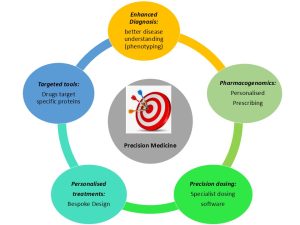
A session that really stood out to me was about creating an app designed to help with children’s medicines and dosing adjustments. We learned how dosing can vary for each person depending on different factors, and how technology could make this process safer and more accessible, like how the NHS app works, but tailored specifically for children’s medicines. I found it fascinating to explore concepts like pharmacokinetics (how the body absorbs drugs) and pharmacodynamics (how drugs act on targeted areas in the body). We also discussed the four key steps of medicine in the body: absorption, distribution, metabolism, and elimination. Understanding these processes showed me how precise dosing can be life‑changing, especially for children, and how an app like this could improve healthcare accessibility and outcomes.
Session 2: Optical Coherence Tomography (OCT) to help Children with Brain Conditions
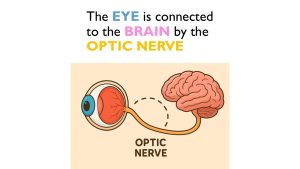
The next session focused on a rare condition called cerebral visual impairment and raised intracranial pressure. I was introduced to how OCT scans can be used to identify these issues in children, which felt like a whole new area of healthcare being investigated. It was exciting to see how technology can open doors to diagnosing rare diseases more effectively, and the session made me realize how important innovation is in improving children’s health.
Session 3: Tissue Replacement and Organ Engineering (Building an Oesophagus for babies with a broken one)
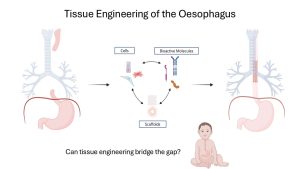
Another fascinating session explored tissue replacement, combining life sciences and engineering to build organs for children with malfunctioning ones. We learned about induced pluripotent stem cells(lab-created stem cells made by “reprogramming” adult cells (like skin or blood) back into an embryonic-like, pluripotent state); removing their DNA, and applying tissue engineering to create new organs. The toolkit for this process includes three main components: cells, scaffolds, and bioactive molecules, all within a carefully designed environment. Seeing the images and hearing about how this could increase survival chances for newborns was truly inspiring. It felt like looking into the future of medicine.
Let me sign off with…
The meeting wrapped up with reminders and updates, but what truly made the ending special were the opportunities shared for young people. From the young people led ‘GOSH YPAG Medical School Meet Up’s’ to the annual UCL Division of Psychiatry Workshop in February 2026, it felt like doors were opening to help us grow, learn, and prepare for the future. Knowing that GOSH YPAG isn’t just about one meeting, but about a whole journey filled with chances to develop new skills and explore healthcare in different ways, made me even more motivated. I left feeling inspired, proud to be part of something so meaningful, and genuinely excited for the next meeting and all the opportunities that GOSH YPAG has to offer. I can’t wait to continue this journey!
Thank you for reading!
Tanvir
My experience so far…
By Tiana
Hello! I’m Tiana, and I joined GOSH YPAG in July 2025. Since then, I’ve taken part in three sessions, each bringing together young people to make research more accessible and to ensure the voices of young people and families shape the design and delivery of paediatric research. Communicating directly with researchers who are experts in their fields was intimidating at first, but as these interesting discussions unfolded, I found myself eager to contribute to the excellent ideas and valuable perspectives being discussed by YPAG members.
November 2025 meeting
I was genuinely fascinated by the innovative research being presented, which aimed to solve various problems in medicine, from precision dosing in the NHS to using tissue engineering to build an oesophagus for babies! I was particularly inspired by how collaborative the sessions feel. Researchers were open to adapting their language, study design, and explanations based on our suggestions. The ideas shared by other YPAG members pushed my own thinking too, especially when ethical and communication considerations came up. Seeing how all these different perspectives fit together to create a clearer, more patient-focused picture has been genuinely rewarding.
These experiences have deepened my understanding of the significance of patient-centred care. Each time we reviewed a patient information sheet, I was compelled to ask myself: What would a young patient notice first? What might worry them or be confusing? What matters most to them? Doing this regularly has helped me develop empathy and understand how communication and design choices can shape the patient experience. I’m excited to contribute to the next meetings and support more novel research projects that can potentially transform the lives of young patients.
My favourite session of the day: Developing a Medicine Dosing App for Children (Bringing Precision Dosing in the NHS)
Our session started off with an exciting project proposal on bringing precision dosing to the NHS, essentially making sure each patient gets the right dose of a medication based on their individual needs and not just the standard one-size-fits-all approach.
We learned that people respond differently to the same drug for countless reasons: age, drug-drug interactions, other health conditions, and even genetic differences, which could affect how certain patients metabolise different drugs. Currently, the NHS relies on standard dosing and further adjustments. Precision dosing is designed to reduce that trial-and-error risk, preventing patients from receiving doses that are either too high (and potentially harmful) or too low (and ineffective).
Precision dosing is basically a step-by-step process built around PK/PD modelling. First, variables that change how a drug behaves in the body are collected: pharmacogenes, lab results such as kidney and liver function, age, gender and weight. These feed into a PK/PD model: Pharmacokinetics: how quickly the drug is absorbed, distributed, metabolised, and cleared. 2. Pharmacodynamics: what the drug actually does to the body and its effects on the target, but also side effects that may arise
The software combines these inputs with real-world data from previous patients to calculate the safest, most effective starting dose for someone with that specific profile. Once treatment begins, the actual drug level in the blood is measured, and the algorithm adjusts the dose accordingly.
As YPAG, we reviewed patient information sheets for this concept. Interestingly, we suggested swapping “individualised dosing” for “personalised dosing,” since it carries more human and personal connotations, as well as a more transparent breakdown of how the software actually works.
We also explored whether patients would want a smartphone app to monitor their medication. Many of us felt it could empower young people in their care to feel more prepared and involved in their treatment, though we recognised it might cause anxiety if results fall outside expected doses. However, we considered the benefit during consultations and how this could bring up points of concern with their doctors at appointments. Another point of discussion was whether parents should also be able to monitor these results, and we agreed that it should ultimately come down to patient preference and that the app could give the option to make results visible for parents.
Overall, this project was a reminder that as modern medicine increasingly incorporates technology into treatment, maintaining patient trust in these treatments can be difficult. As AI and advanced tools become more integrated into NHS care, it’s more important than ever that patients still feel in control of their treatment and their journey and not feel reduced to data points in a process that can easily feel distant and technical. Precision dosing has huge potential, but being part of YPAG enabled me to improve communication and delivery of these novel approaches that keep the patient at the centre of their care.
Thanks for reading!
Tiana
My Impact Report on GOSH YPAG 29 November 2025 meeting
By Eva
Hello, I’m Eva and on Saturday 29th of November I had the pleasure of joining the last GOSH YPAG session of 2025! We had a lot in store and every session shed a light on various spheres of research and study which blossomed with the input of YPAG members insights.
Session 1
Developing a Medicine Dosing App for Children (Bringing Precision Dosing in the NHS)
Precision dosing is an aspect of precision medicine which tailors’ disease prevention and treatment for individual patients. Precision dosing is the specialist software that uses pharmacogenomics which investigates what effects different doses. Currently, body weight and BMI as well as age are stipulating factors in dosing. The study introduced looks into 2 new factors:
Pharmacokinetics (PK)- what the body does to the drug. How does it absorb the drug? How is this then distributed? How is it metabolised? How long is its half life- how long does it take for it to be eliminated?
Pharmacodynamics (PD)- what the drug does to the body? Is it accurately affecting its targets? Is it having on-site action? Are there any off-site consequences (side effects)?
The PK/DK model looks into gender, age and body size but also factors in pharmacogenes and lab results on kidney and liver function.
What did GOSH YPAG do to support the researcher?
Analysed the plain English description of the study, clarifying it and adding aspects to it, like an information booklet about specific medicines and how they will be dosed for patient awareness and safety.
Discussed an app to track dosing of the medication. This app would allow patients to be in more control of their care and make regular check-ups more efficient, as the patient can go into appointments ready to discuss developments. We recommended a medium to contact medical professionals inbuilt to the app. In case of emergencies, this makes the hospital easy to contact.
Discussed what age parents should stop seeing the medication monitoring results with YPAG concluding that every patient has a different personality, social background, and life. There are many factors that plays into parental guidance in healthcare- in accordance with this- it should be up to the patient. A button giving them the choice to share their results, puts autonomy in the patient’s hands.
Session 2
3D Eye Scanning: Optical Coherence Tomography (OCT) to help Children with Brain Conditions
Optical Coherence Tomography (OCT) is a handheld 3D eye scanning technique, which works by aiming light into the eye; the machine measures the time delay and intensity of the light that reflects back from the different layers of the internal eye structures. It is a less invasive and child-friendly means of studying the brain.
In this YPAG session we were introduced to two studies using OCT:
Recognition of Intracranial pathology in children using OCT (RIO Study) studied 200 paediatric patients and OCT could identify intra cranial hypertension (high pressure in the brain). With adaptation over time, it can pick up more pathologies leading to diagnosis of conditions like Cerebral Visual Impairment (CVI) and Craniosynostosis. Early recognition of these pathologies leads to a reduced lifelong impact of them.
Normal Eye development in Children using OCT (NEO) plans to identify what a normal OCT looks like across a range of ages, races and genders so a database can be gathered- which will aid diagnosis. It requires 700 children from birth to 18 years to be monitored over a five-year period.
What did GOSH YPAG do to support the researcher?
YPAG were tasked with identifying what could motivate volunteers for the study- responses ranged from making it a group activity, providing money, or trips to locations in London to accompany GOSH visits. We also discussed how and where to advertise. From Science groups, scouts, social media, posters in museums, School trips to the BCR open day, we had means to gain a large diverse sample population.
YPAG were also assigned the NEO logo competition. A YPAG member had won the previous RIO logo competition, with a toucan whose big eye honours the namesake of Rio De Janeiro and provides a friendly face to members of the study. We will find out what YPAG members have in store for NEO by the 16th of January 2026!
Session 3
Building an Oesophagus for babies with a broken one
The oesophagus is a pipe connecting the mouth to the stomach- which if damaged prevents digestion and nutrients reaching the body. Tissue engineering is a multidisciplinary approach that creates functional replacement tissue (making new tissues for the body)
It can be less invasive than an organ transplant because, when using your own cells, you usually don’t need medicines to stop your body from rejecting it.
The core of tissue engineering lies in:
Scaffolds- 3D structures which support and guide cell growth, such as hydrogels, porous membranes, and polymeric materials.
Bioactive molecules- growth factors, cytokines and small molecules that regulate cell behaviour, promoting proliferation and differentiation for tissue organisation.
Cells- the building blocks of tissue engineering. In this case they could be autologous (from the patient’s stem cells) or allogenic (from a match/compatible donor)
Fabrication biotechnologies- which provide the right environment for the making of tissues. This includes bioreactors and other equipment for 3D printing and manufacturing.
What did GOSH YPAG do to support the researcher?
YPAG discussed this concept and tried to make sense of the process of scaffold fabrication- specifically decellularisation. YPAG member Calista used the analogy of removing furniture from a living room. The cellular components of the organ are removed to create a biological scaffold with preserved architecture and composition. This intelligent interpretation led to questions about how long tissue engineering lasts (for life as it integrates with remaining tissue to be functional) and a discussion about how to make the concept more comprehensible for young patients (a story book or comic strip).
Session 4.
Helping Children Recover after Heart Operations
Human bodies react differently to many things- life changing operations are one of these things. Suffering side-affects in cardiac post-operation can dishearten patients, especially children. Some children recover rapidly, whilst others suffer- this study introduced to us aims to investigate why.
This study aims to understand different reactions to heart operation by giving measuring vitals for 300 children post cardiac-op.
What did GOSH YPAG do to support the researcher?
We discussed the plain English summary of the study:
Aspects like the net positive of using samples that would otherwise go to waste.
The idea that these samples would be taken during sleep.
How the results of the sample would be correlated with recover time to identify which factors play the biggest role.
There was also discussion about who should be involved with the patient. Who would communicate the idea of the study with them and their families and are there any kid-friendly ways to do it (like an interactive game). Despite it using an anonymous study number system, would some patients and parents want to be kept in the loop about how the study is progressing- how can contact be maintained?
Session 5
BReath ANalysis in CHildren (BRANCH) Study: Identifying lung infections in children using a breath test
Breath analysis is a simple way to check for lung infections early. The study aims to see how well breathomics (finding illness by measuring substances measuring substances like volatile organic compounds in breath—works compared to standard tests that use mucus (sticky stuff from your nose or lungs)
Air samples are taken from the tubes that connect patients to breathing machines, so treatment doesn’t have to stop. These samples are then analysed to look for signs of infection and compared with results from regular tests. Finally, the study will explore who could benefit most from using this method.”
What did GOSH YPAG do to support the researcher?
We discussed promotion of the study through workshops, videos and leaflets with a complete guid of the initial ideas of the study to its final results. We also noted the importance of an open advice stream while awaiting results to make clarifications. All in all, this study will help make diagnosis a much more efficient and effective process.
This YPAG session, like all sessions I attended this year showed the progress the healthcare field was making. Taking steps to a bright future in prevention, diagnosis, and cure of paediatric patients all with the involvement of young people. Being able to see it first hand this year makes me hopeful for 2026 (something I feel the whole world needs right now).
Thank you GOSH YPAG for being a beacon of hope in 2025, see you in 2026!