By London YPAG,
Hello, I’m Eva and on Saturday the 26th of July I joined my first hybrid GOSH YPAG meeting day!
What were my first impressions?
Now, let’s get on with the day…….
Spiritus Study Update
After the introduction of new group members (and pop-up appearances of any pets), we swiftly began with an update from the SPIRITUS study, which began two years ago to optimise dissemination for research into sleep disordered breathing (sleep apnoea) for children. With the help of GOSH YPAG the researcher managed to rule out Padlet as a means to garner intel from workshops. YPAG members noted it was clunky, was not especially compatible with mobile devices and had many technical difficulties. Then a YPAG member, who uses Zoom, provided some top tips for using this platform in research, especially with young people. These included: checking in to see if the young people are in a are space to talk, leaving the chat option available and making camera on as optional.
The most inspiring aspect of this update is the resources developed once the research was collected:
Thank you to the research team at SPIRITUS for the update, it is always remarkable to see the difference we make as a group.
EveryOne Medicines

Our first session of the day was with a clinical professor who introduced us to Antisense oligonucleotides (ASOs). They change how proteins are made from DNA, which helps tackle non-communicable genetic diseases. The professor used the analogy of a genetic mutation changing sugar into pepper in a cake recipe (so the cake is spicy) and the ASO corrects that printing error, so the cake is sweet again.
ASO research was first funded in Russia for a patient named Mila who had a lysosomal storage disorder. The ASO was developed in less than 12 months and was called milasen. Whilst her condition improved, the administration was unfortunately too late. This story gave rise to EveryOnes medicines- a company set on individualised medicine to target treatable genetic mutations. The development of these drugs takes less than two years, in comparison to the 10–15-year development model for a traditional medication.
Currently there are two patients with similar lysosomal storage disorders to Mila at GOSH. The research team want to conduct a clinical trial to monitor the neuroprogenitor cells (NPCs) in the brain. Specifically, in regard to symptoms like losing the ability to walk and talk, difficulty eating independently and regular chest infections. This will be monitored using machines called Syde and Emerald Sensors. GOSH YPAG needed to assess the assent form for the clinical study and give tips, so it is both comprehensive and easy for the children participating to understand. Some of our recommendations included:
YPAG also wanted to make it more interactive for children, with games like spot the sensor and a way for the children to design straps and accessories for the contactless emerald sensor.
Quantum Sense Check

This session was a continuation of the online meeting in May this year where GOSH YPAG was introduced to Quantum in Medicine. In honour of it UNESCO’s year of Quantum Science and Technology https://www.unesco.org/en/years/quantum-science-technology , we were presented with a detailed analysis of Quantum techniques and how they are aiding in more exact diagnosis and adaptable treatment.
Quantum technology CNS be used in biosensors for biomedical imaging, in-vitro diagnostics, interventional tools, and basic life sciences. We were taught about Nitrogen Vacancy centres in diamonds (which are bright, photo stable and biocompatible and can have fluorescence modulations in order to reject background signals). They can help identify different dynamics within biological systems. For example, in lateral flow tests they can make the analyte (the target cell, e.g. COVID) flash so it can be detected. It does this using a bioreceptor (e.g. COVID antibody) to tag the analyte and then use the transducer (e.g. NV-nanodiamond) to highlight it. This type of assay can be more efficient, low cost and can be monitored using a portable reader.
Optically pumped magnetoencephalography (OP-MEG) is a non invasive window into brain function, helpful for pathologies in neuroscience. With quantum technology OP-MEG has become less expensive and more adaptable, especially for children experiencing epilepsy. This is because typical OP-MEG helmets can be restrictive and expensive, whereas with Quantum adaptations, the OP-MEG helmet is lighter, more accurate for diagnosis and can precisely locate the source of epilepsy in patients.
AI Youth Council

Artificial Intelligence (AI) is the newest technology used in various sectors to optimise daily activities and make them more accessible and efficient. Paired with its possible positives are downsides the public deserves to be aware of. As the generation most likely to utilise AI, the youth cannot be ignorant to AI and its uses. AI is already used in hospitals, whether it is adapting scanning tools or making note taking and letter writing more efficient with Tortus software. A team of researchers have proposed setting up an AI Youth Council who will help with the paediatric perspectives for AI use in medicine. The aims of this council are for young people to team up, have their say, create change and lead the way for AI’s introduction to the medical landscape.
GOSH YPAG gave advice on aspects of the AI Youth Council such as:
We were provided with an overview of the first workshop: three icebreaker tasks, which can aid in the assignment of council roles and an opportunity to feedback on what the YPAG members know about AI. This paves the way for a series of workshops exploring AI’s applications in healthcare; a programme that gives the youth a place to critically assess AI’s implications and share their opinion on these advancements.
OctiPAT app
OctiPAT (which one YPAG member keenly noted, sounds a bit like octopus), is an app for paediatric patients to be more involved in their own care. Developed in 2020, the tool is efficient, easy to use and helps involve the whole Multi-Disciplinary Team (MDT) and connect them throughout the patient’s journey.
GOSH YPAG were introduced to OctiPAT’s use via a patient story; a patient who had Epidermolysis Bullosa (EB)- butterfly skin. This rare lifelong skin condition affects the whole body including the mouth and gut. It is characterised by large areas of skin that blisters, leaving behind a wound. Patients with EB often must come in for multiple appointments a day- across the MDT. With OctiPAT, patients can ask questions before scheduled appointments, making them more efficient and effective. As they may not be able to use their fingers to use the App , there is a voice option.
GOSH YPAG were asked for feedback before the team of researchers and practitioners presented the app in a workshop. YPAG mentioned a language barrier for patients, since it is only available in English for now. We also gave advice for the best way to present the app, to which some members recommended asking the Play Team for support, as the patients would be most comfortable with them.
Biobanks

A bio bank is a collection of biological samples provided with matching health information, essential in biochemical research. We learned about two types of Bio-banks, an infection DNA bank and a Living Airway bank.
The infection DNA bank (IDB) uses left over samples from diagnostic test and their resulting sequencing data. By connecting clinical labs with these materials to researchers studying distinct aspects of infections (its source, how its spread, how it affects the body etc.) they can use the information to aid studies such as:
The Living Airway Bank collect human samples for research from tissues in the nose and lungs for culture models. This is important to access clinically relevant and affordable respiratory tissue, which is a major limitation for drug discovery and basic research into respiratory disease. It is approved by the human tissue authority and facilitates the primary supply of human airway tissues at cost price with over 400 tissue samples.
A researcher working at a bio bank presented a day in his life, which consisted of collecting swabs for culturing from volunteers, infection assays produced from adding different drugs to virus cells and measuring their growth and analysis from this. That could range from taking picture on a microscope to generating graphs or authoring reports.
GOSH YPAG was tasked with assessing an advert for public involvement into the process of IDB development. For projects to gain approval to use samples, they need to go through a committee which consists of at least one member of the public. This individual would receive £50 compensation for each meeting (alongside getting insider access to upcoming biochemical advances), £25 for reading and £25 for meeting. They would have to critically assess the studies and whether the samples are necessary for the research to go ahead; a vital role to keep up the ethical standards of the IDB.
How did we end the meeting?
To conclude our meeting, we as a team recorded sound bites for the upcoming NIHR GOSH BRC Showcase 2025. It will be inspiring to see everything coming to light during the event and see how we, GOSH YPAG, have played a pivotal role in making that happen.
Thank you for reading!
Eva
A Research Advisory Group with a ‘Co-Production’ vibe From the beginning, we wanted our YPAG (Young People’s Advisory Group) at Moorfields Eye Hospital to have a ‘co-production’ feel; we aspired to work together with a sense of everyone being equal, with every member’s views heard and valued. To help us, we were lucky to partner […]
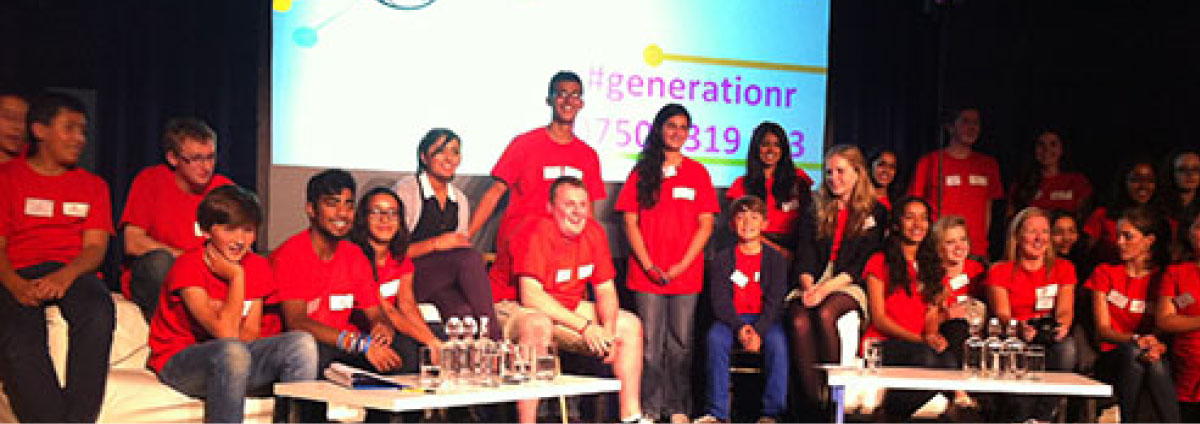
How children, young people and families have improved the design, development and delivery of paediatric research.
We play Pictionary using research concepts intead of the usual game cards, allocated to different levels of difficulty.